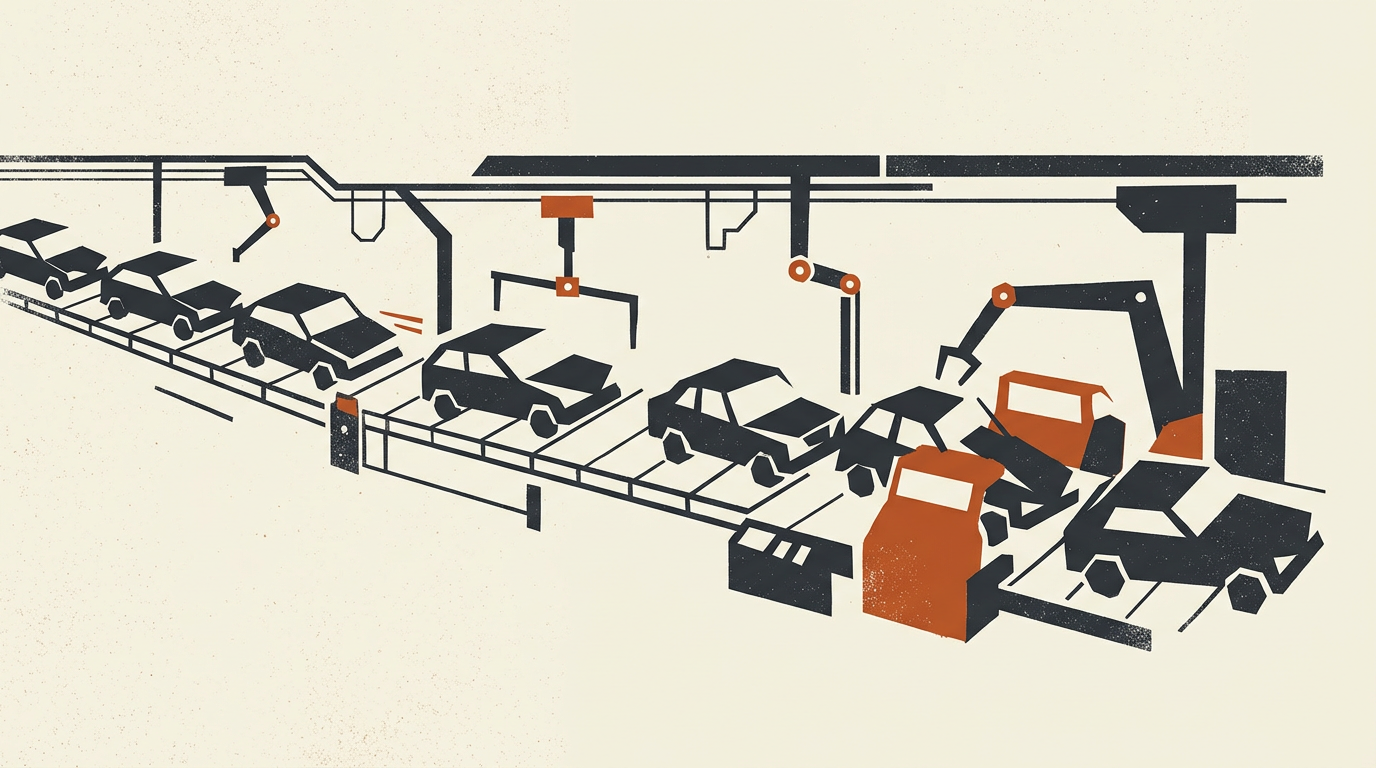
Electric vehicle maker Lucid Motors has significantly reduced its manufacturing pace, bringing vehicle assembly down to its lowest level in nearly two full years. The sharp decline in output represents a planned adjustment by the automaker, which is purposefully choosing to scale down its manufacturing facilities rather than maintaining higher baseline assembly targets.
The decision to deliberately limit vehicle production follows years of ongoing difficulties in capturing mass-market consumer demand. Although the company sought to establish a broad footprint within the zero-emission automotive sector, generating widespread interest and consistent sales across a larger audience has remained an uphill battle for the organization.
Rather than continuing to run its assembly lines at elevated rates and building up excess vehicle inventory, management is choosing to tighten controls over its factory output. By recalibrating its manufacturing schedule, the company can closely match its vehicle supply with realistic buyer demand, stabilizing operational expenditures during a period of sluggish customer uptake.
This strategic pull-back underscores the formidable operational hurdles confronting specialized electric vehicle brands today. When consumer adoption lags behind initial corporate forecasts, maintaining high-volume production schedules becomes financially unsustainable, prompting executive leadership to prioritize supply-chain efficiency and strict cost containment over aggressive expansion targets.
What it means
Lucid Motors' deliberate operational slowdown reflects a broader shift toward risk mitigation within the electric vehicle industry. By lowering assembly output to a two-year low, the manufacturer explicitly acknowledges that building mass-market appeal takes time, and that aligning factory capacity directly with actual sales figures is essential for maintaining long-term business sustainability in a shifting commercial landscape.