At the VB Transform 2026 conference, Stanford University associate professor of biomedical data science James Zou outlined a fundamental shift in AI development. While many current technical workflows rely on a single developer paired with a single AI helper like Claude Code, Zou presented a model centered on scaling orchestration to coordinate tens of thousands of autonomous agents working in tandem.
The project initially started as a compact Virtual Lab modeled directly after Zou's physical research team at Stanford. This early iteration used five to eight specialized agents, including a digital principal investigator to lead the team and simulated students focusing on distinct scientific disciplines. These virtual researchers gathered for regular group meetings to coordinate their work. To continuously enhance their domain expertise, the researchers created a simulated university environment—dubbed an agent school—where the software programs undergo supervised fine-tuning.
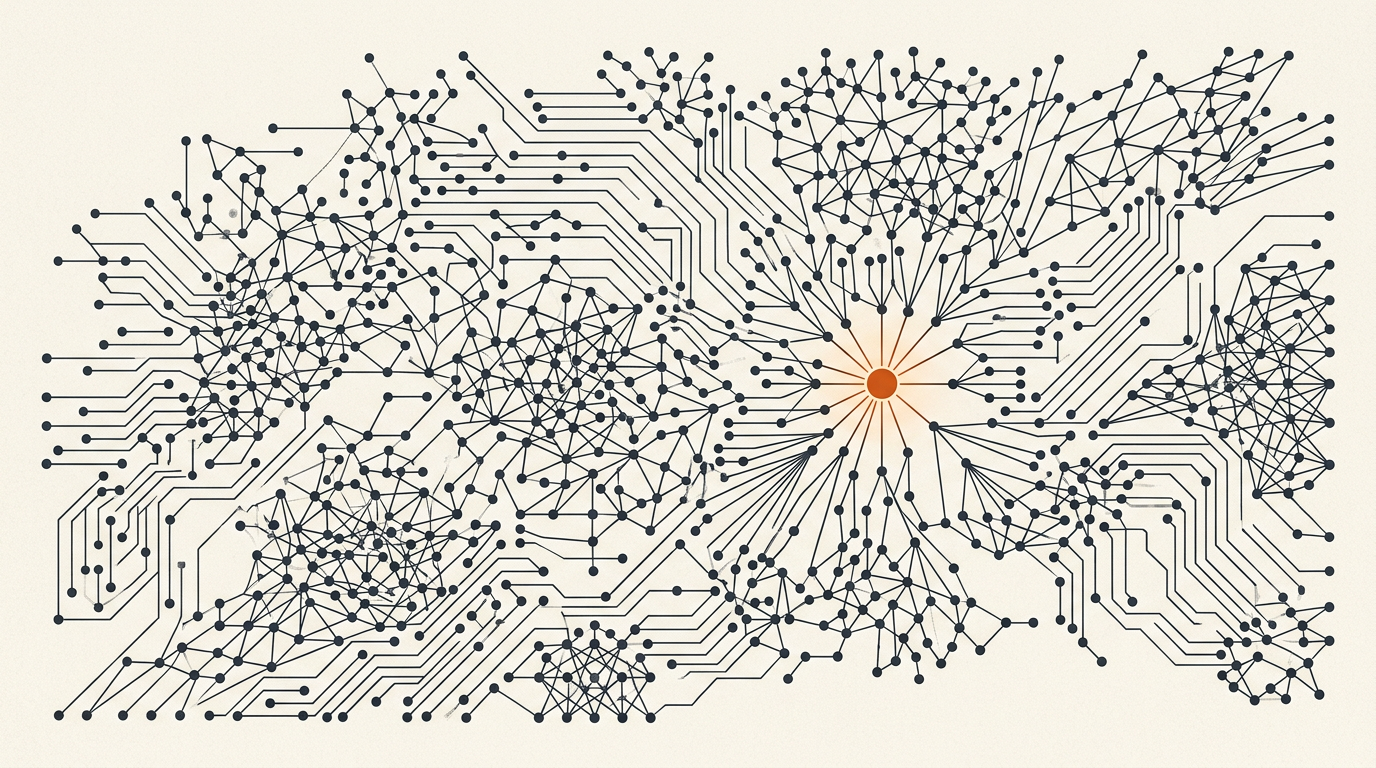
The initiative has since scaled into a full virtual biotechnology entity running 37,000 interconnected agents. Building the platform required designing orchestration layers capable of connecting traditional legacy databases to modern AI systems, enabling the agents to pull structured scientific data while performing collaborative tasks. Demonstrating the practical value of the setup, pharmaceutical giant Merck independently validated a drug design proposed by the multi-agent network.
What it means
The Stanford research indicates that enterprise software design is evolving beyond standalone models toward massive agent networks. By structuring AI teams to mimic real-world organizations and providing dedicated training environments, complex scientific research can be broken down and executed by autonomous systems at scale.